

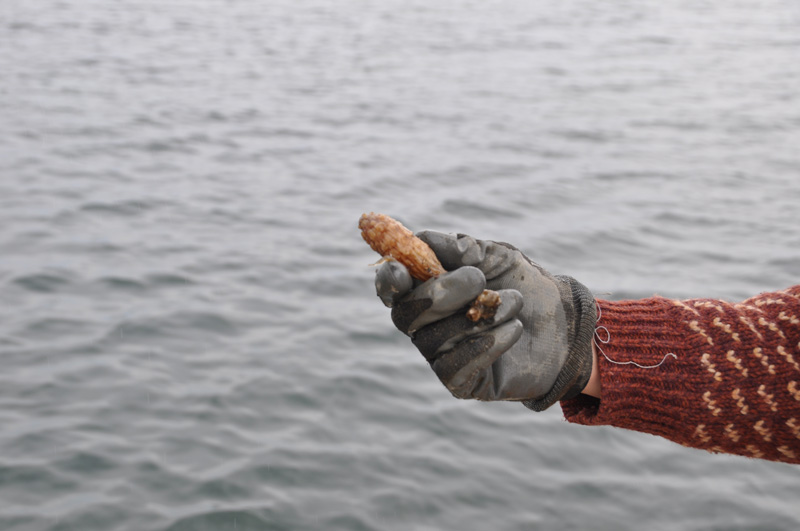
Long after the summer crowds have left the Island, those who remain are able to enjoy the peak-quality shellfish that the winter has to offer.
Oysters in the winter are sweet. Colder water slows their metabolism, causing them to store more natural sugar for energy. This buildup gives them their distinct flavor, along with a firmer, meatier texture.
A bay scallop right out of the water is delicate and tender, with a similarly distinct sweetness that deepens in the winter months. By the time June rolls around, the stock is dwindling, and eating fresh local bay scallops is nearly impossible.
Part of what makes shellfish season feel special is exactly this limitation: A freshly shucked sweet winter oyster is a hyper-local experience; you can’t get the same thing year-round.
As the season, which typically runs from October to March, comes to an end, Liam Cosgrove reflects on his winter on the water.
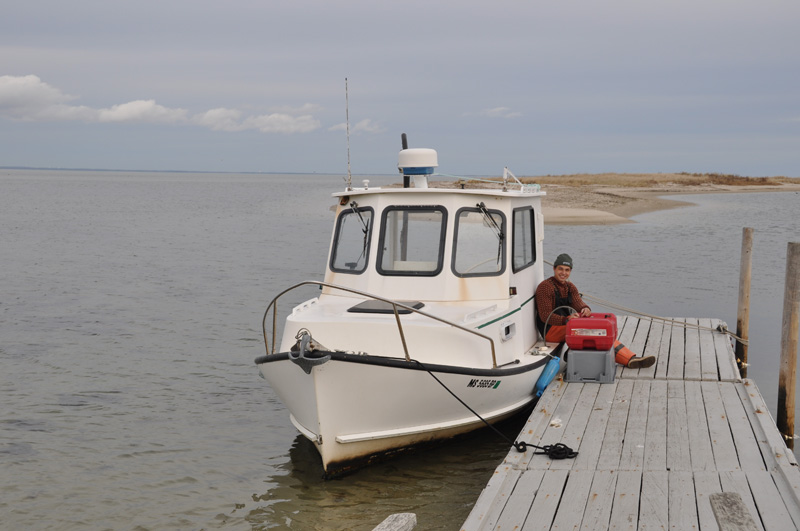
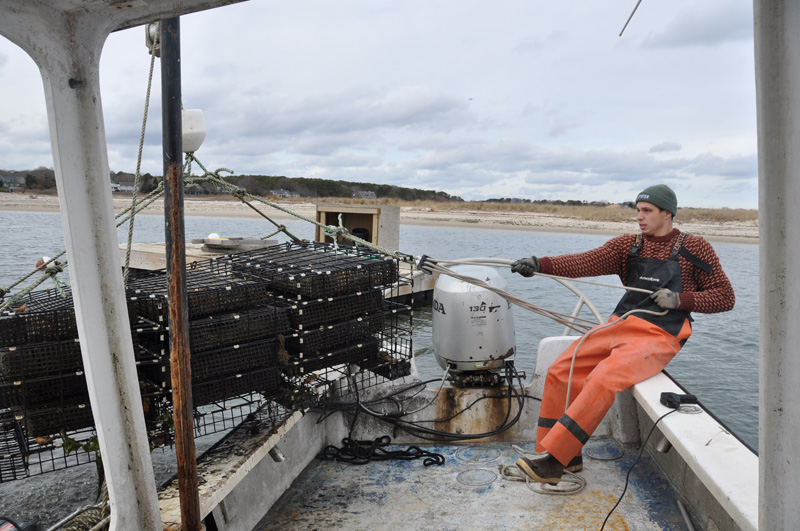
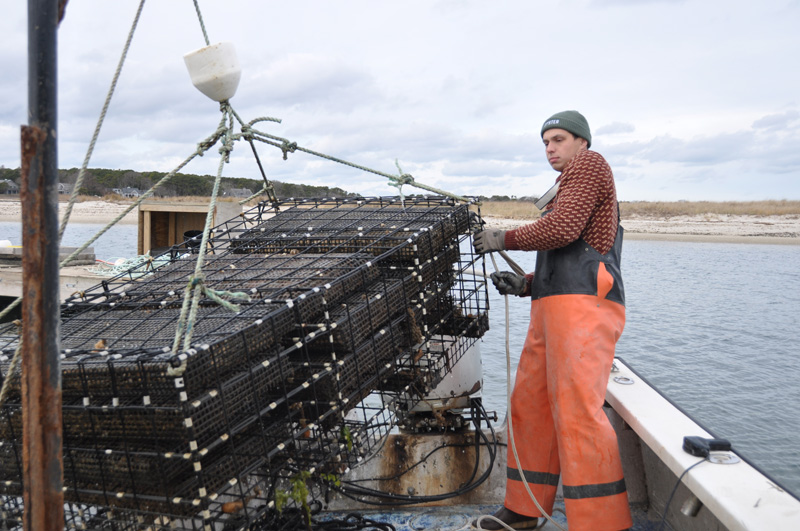
Cosgrove is the farm manager of Top Shell Oyster Farm, and the captain of the Oyster Catcher. Top Shell is run by Cosgrove with his business partner, Maddie Henson, and is the first farm in Edgartown to raise oysters exclusively in the open ocean. Most farms are in ponds; in Edgartown, all of the others are in Katama Bay, but Cosgrove’s is offshore, near State Beach.
“When I was a kid I wanted to create my own reef, and now I kind of have,” said Cosgrove. “I knew I wanted to work on the water, and after a bunch of different attempts, eventually I found it.”
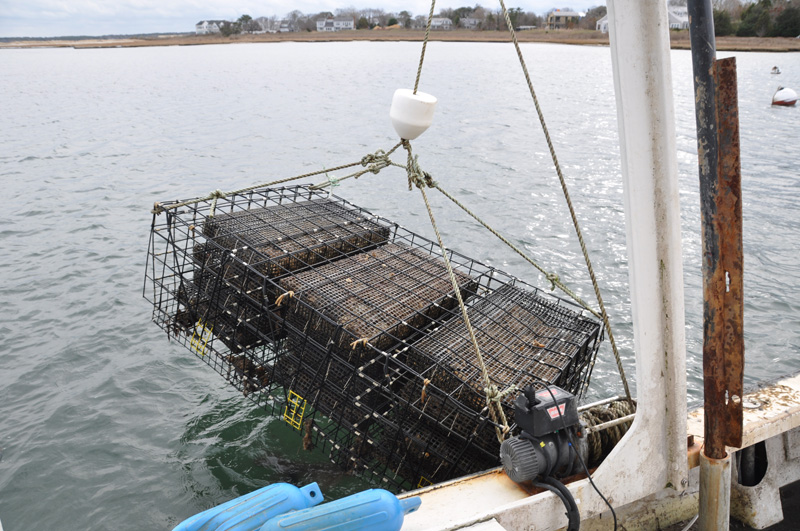
Top Shell Oyster Farm consists of two acres marked by four yellow corner markers. It is 30 feet deep, and there is pebble substrate at the bottom of the sea floor to provide a firm surface for spat, or juvenile oysters, to attach and grow.
“There are 12 leases available, and the wait was so long that we decided to go out to sea, which is much harder,” said Cosgrove. “There are some pros to it: At one point in the summer, I was the only one available to still sell oysters.”
Cosgrove has a nursery system in Katama, and when the oysters reach thumbnail size, he puts them into the water. “Everything I’m growing is already sold,” said Cosgrove, who isn’t worried about a lack of demand for his oysters. “Oyster farming is thriving,” he said, “and it’s really good for the ocean.”
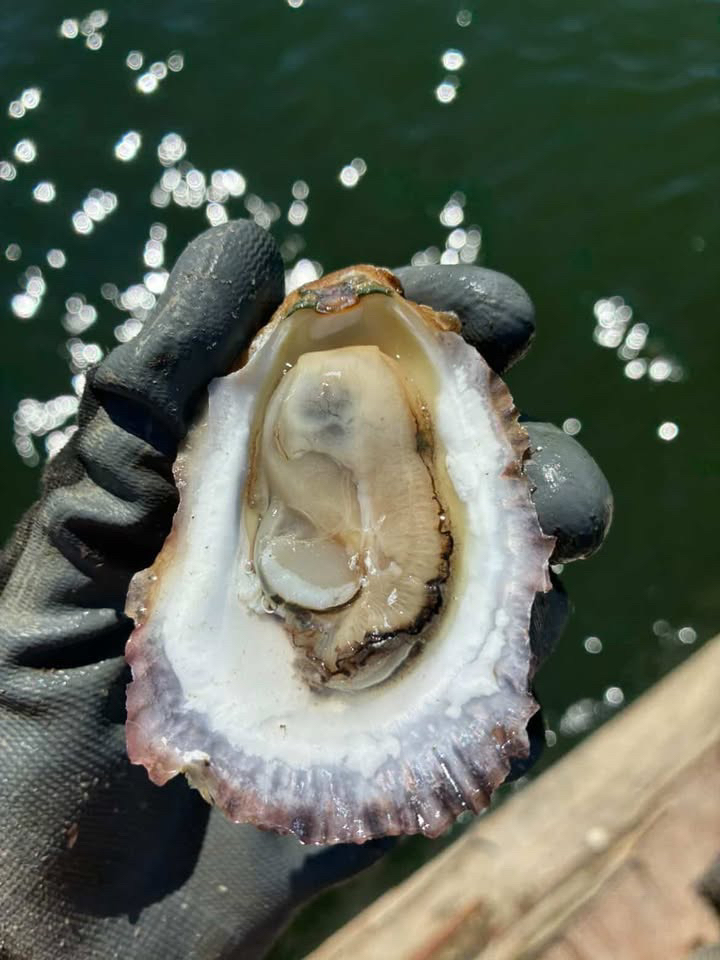
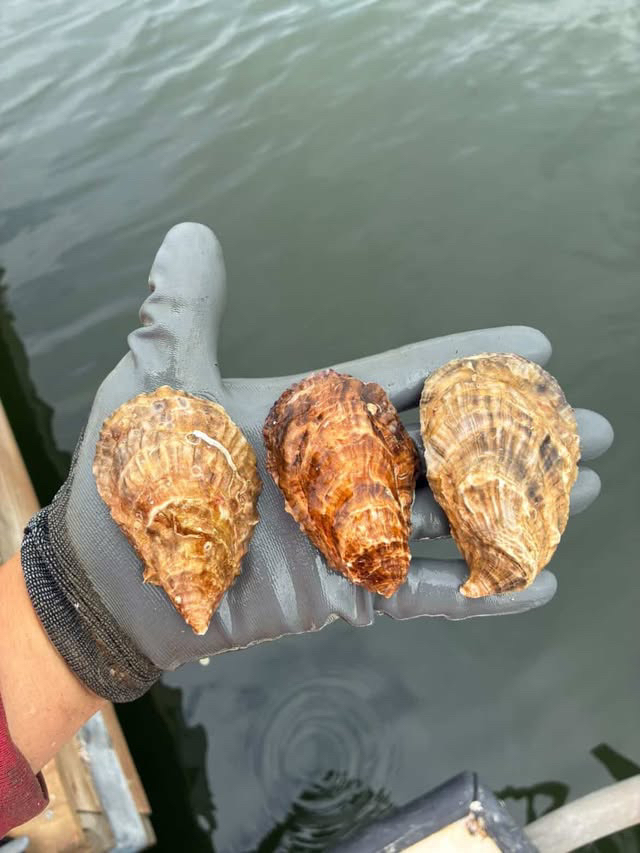
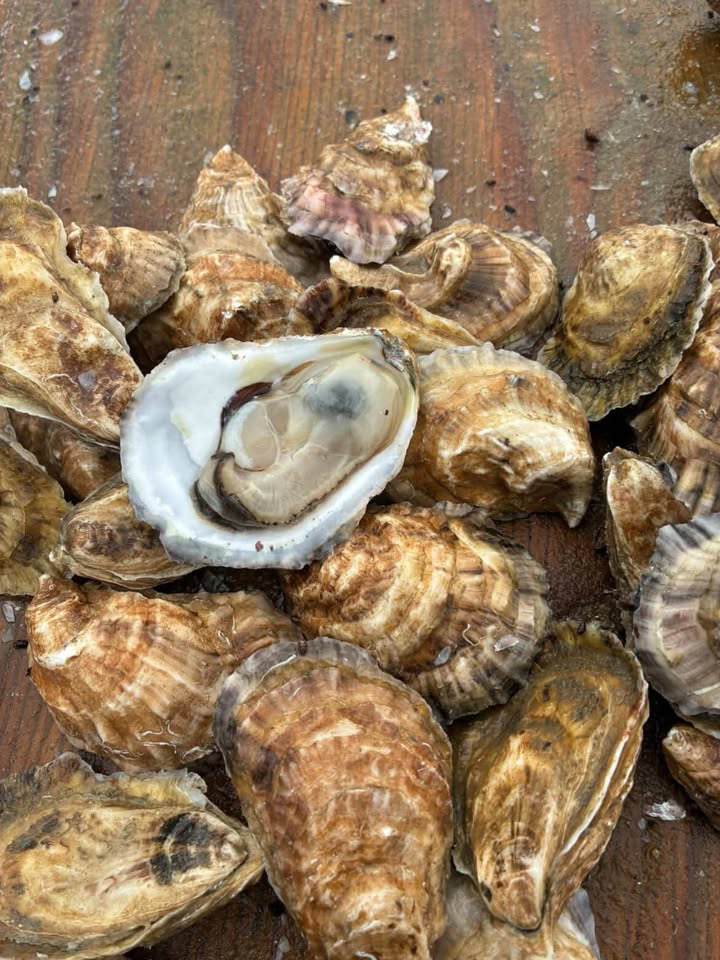
In the ocean, oysters act as water filters, habitat creators, and natural barriers. They filter water by eating algae and excess nutrients, which improves water clarity. They also form reefs by attaching to each other, which provides shelter and nurseries for other marine life. These reefs can stabilize shorelines and protect against storms and erosion.
When Cosgrove first started farming, Nor’easters would blow everything he planted away, so he talked to some of the more experienced fishermen who had since moved into Katama and asked what they would do. “As a general MO, oyster farming, especially on-Island, is very welcoming,” said Cosgrove.
Cosgrove was born and raised on the Island, and this year is his first scalloping. He began free-diving for them recreationally, but now he has a commercial license, which allows him to harvest three bushels a day, five days a week. “It was my first season out there, really trying to do it, and it was definitely a hard season,” said Cosgrove. “I think the stocks were pretty scarce this year, from what I’m told, but that meant the prices were good.”
“The most expensive part of starting is having a boat,” said Cosgrove, who already owned the Oyster Catcher, which made it more affordable for him to begin scalloping. He got his dredges secondhand at yard sales.
The Oyster Catcher was originally won as a Derby prize back in 2003, and was then sold to Tom Rancich, who used the vessel to retrieve unexploded ordinance, “which is really badass — it came with all this cool stuff on it,” added Cosgrove. Now after 23 years of service, it is time for the Oyster Catcher to hang up its hat, as Cosgrove has received a grant which will go toward a new boat: “This boat is going to be partially set up in a way to make scalloping more efficient for me.”
Although Cosgrove acknowledged that there was a bit of a learning curve, he is confident in his ability to get it down, aided by the help of more experienced fishermen. “The shellfish constable helped me out a lot,” said Cosgrove, “and talking to other senior fishermen helps a lot. Everybody was super-open with their information.”
As the spring approaches and the winter shellfish season concludes, what remains is the mark of months spent working in the cold, the tides, and the uncertainty that surrounds life on the water. This year, the loss of veteran fisherman Roy Scheffer and his partner Patricia Bergeron, who died while scalloping in January, lingers over a season defined as much by risk as by reward. “I think that was super-humbling, because there’s nobody on this Island who has more experience than those two when it comes to working these waterways,” said Cosgrove.
Looking ahead to another busy summer, Cosgrove is enthusiastic about what’s to come. “The farm is the biggest it’s ever been, so I’m excited to see what kind of numbers we can do,” he said.
In addition to farming the oysters, the Top Shell team also offers a raw bar experience, providing their personal oysters as well as other Island oysters, lobster, clams, shrimp, or caviar on request. Throughout the summer, Cosgrove himself is often shucking oysters from his own farm at weddings or backyard parties.
As the last of the dredges are hauled in, and Memorial Day approaches, shellfish season ends as a reminder of the lives tied to the water and the weight of working at sea.