


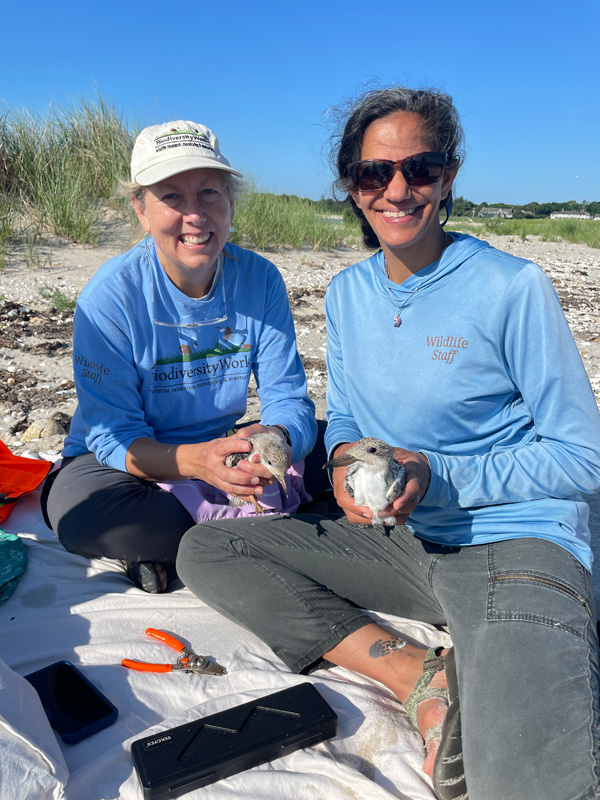
Liz Olson, assistant director, wildlife biologist, and board member of BiodiversityWorks, has not only found her passion, but is immersed in it daily. Hanging out in her cozy office, we chatted about her work at BiodiversityWorks, and her passion for wildlife became evident very quickly as we jumped right into a discussion about bats.
“The Northern long-eared bat is nearly wiped out. Ninety-nine percent of the population has declined from white-nose syndrome,” Olson said. “White-nose syndrome is a cold-loving fungus that came over from, we believe, Europe. It’s killing cave-dwelling bats.”
In 2022, due to the impact of white-nose fungus on the Northern long-eared bat, the U.S. Fish and Wildlife Service announced a proposal to reclassify it as endangered under the Endangered Species Act. Though bats sometimes get a bad reputation, the same article points out, “They are critical to ecosystems, and contribute at least $3 billion annually to the U.S. agriculture economy through pest control and pollination.”
White-nosed fungus manifests on the bats’ skin, causing them to come out of hibernation earlier than they might normally. “They’re itchy, and they’re waking up to a frozen landscape, with no water and no food.”
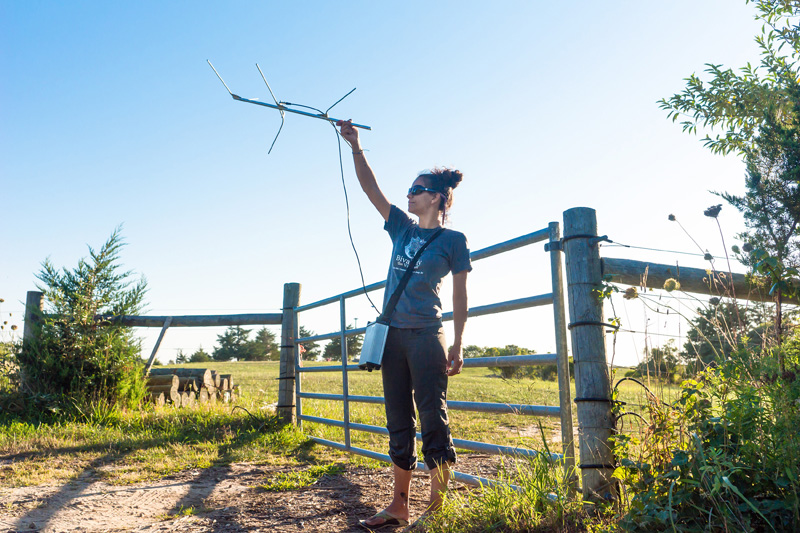
On the Vineyard in 2014, Olson took a picture of a bat inside a bat house, and it turned out to be a Northern long-eared bat. “We thought they were wiped out. We were like, ‘Why are they here?’ We started netting them, and joined forces with a Ph.D. student named Zara Dowling, and the Vineyard Fellowship funded a project that allowed us to study the bats. We tagged them, and determined where their maternity sites were. They were producing pups.”
Olson said that they got a call from Islander Simon Hickman, who lives near BiodiversityWorks, saying he found bats in his basement. It turned out these bats were also Northern long-nosed. “They were wintering here,” said Olson, “not in caves and mines, but in basements and under porches. We teamed up with biologists in Nantucket and Long Island, and it was the same there — bats were wintering in basements and crawlspaces. We were lucky with Simon. He happened to see them, and took the time to contact us. Even though they are exposed to the fungus, they are still persisting, because they aren’t exposed that long. We get these warm-ups in temperatures, so the bats go into hibernation in December and come out in March.” Due to the increase in temperatures these days, the bats are able to find water and moths to eat, which helps get them through the winter.
Olson grew up on the Island, and has always been drawn to animals: “At one point I thought about becoming a vet. Then I opened up the big book of colleges, and there was wildlife management and wildlife ecology. I didn’t even know those careers were an option. I always wanted to work with a wildlife biologist and gain experience in the field, but that experience was not available here then.”
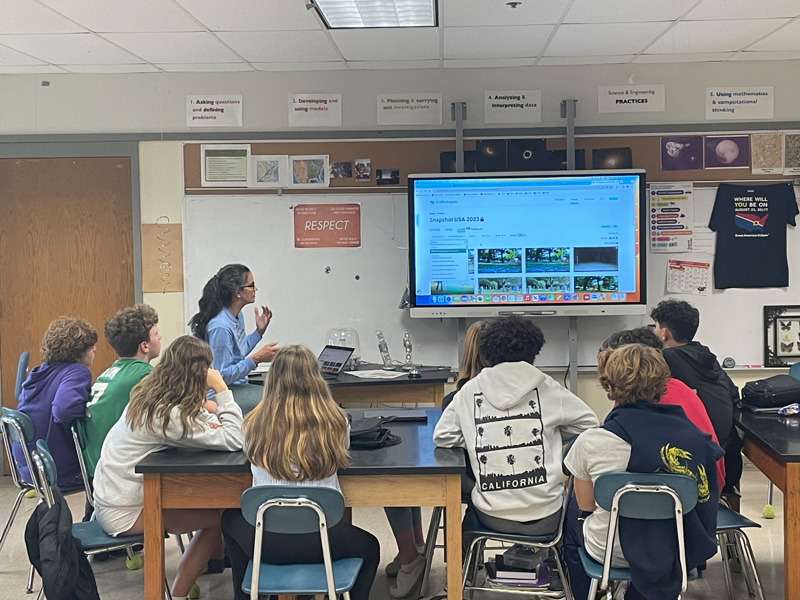
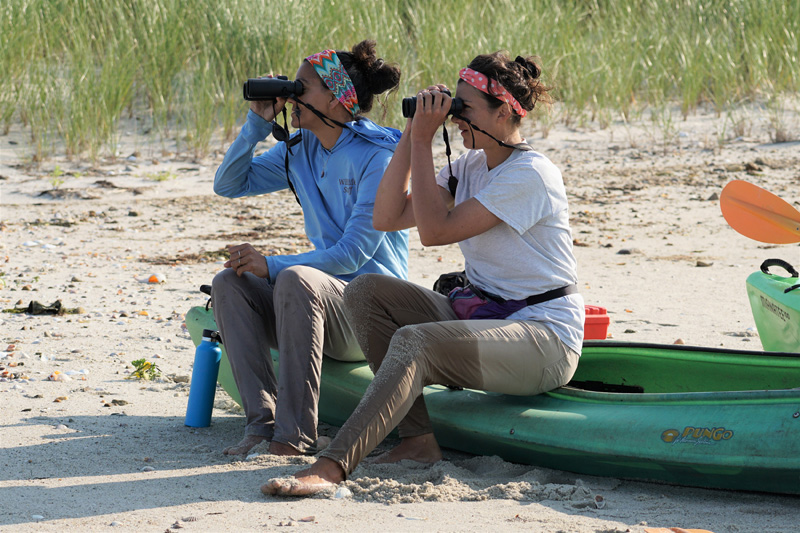
The lack of those earlier internship opportunities led Olson and BiodiversityWorks director Luanne Johnson to create an internship program for Island students and college students. “We want early career students to test out the field and see if they like it,” said Olson. “As a professional wildlife biologist, I wanted to provide interested young people with the opportunity I missed. Cofounding BiodiversityWorks was a way to fulfill this wish, and allowed me to do work that I am passionate about in a place I love.”
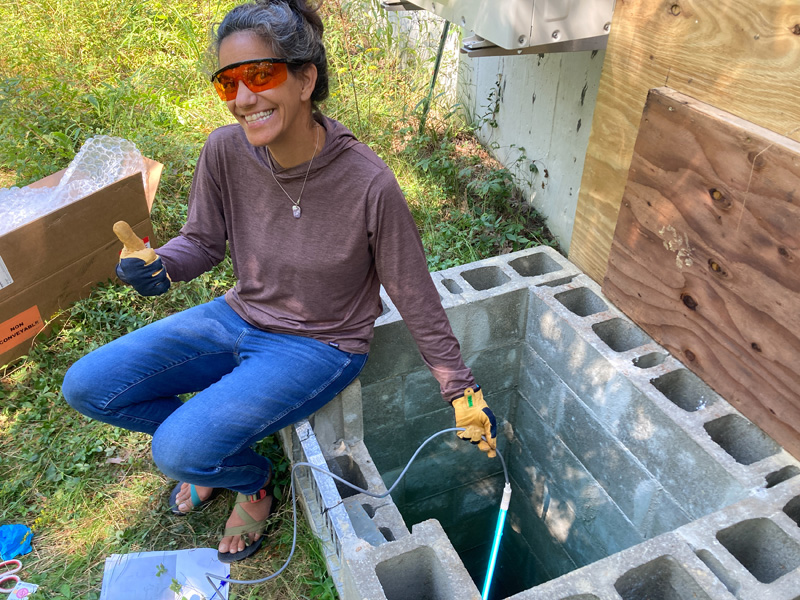
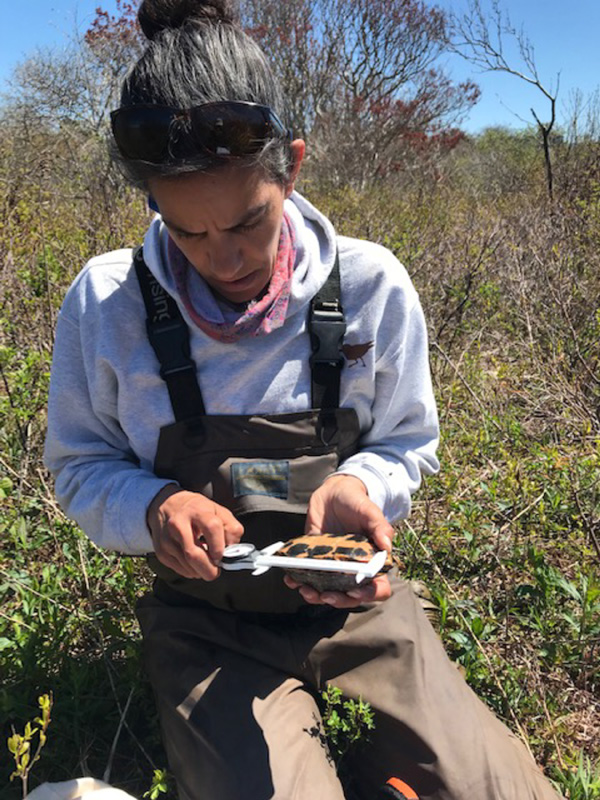
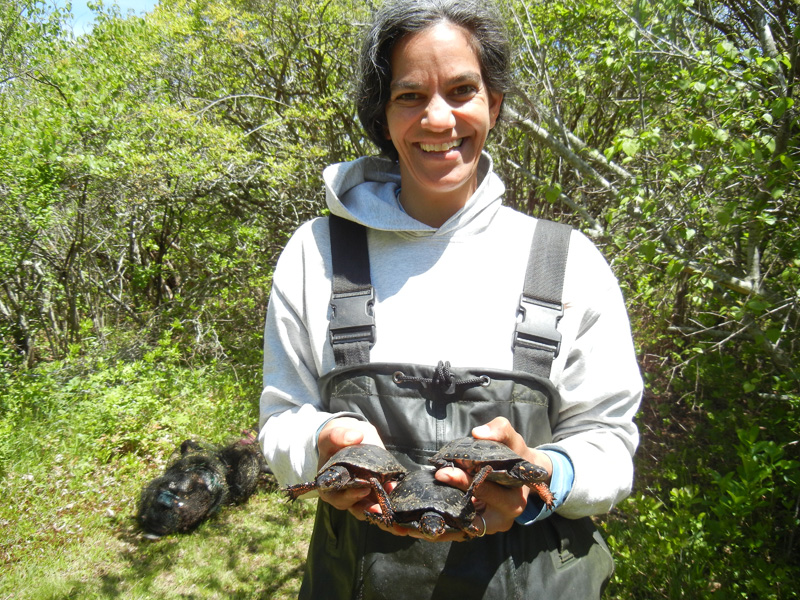
Olson’s work varies with the seasons. “This time of year we’re report-writing, grant-writing, hiring staff, and getting permits in order. We don’t own any property, so we work with the Land Bank and other organizations, so we’re getting our reports to them. I coordinate all the field programs — getting permits and permissions, making plans, creating a schedule. In the field season, it’s busy and fun. We’re outside studying the species we love.”
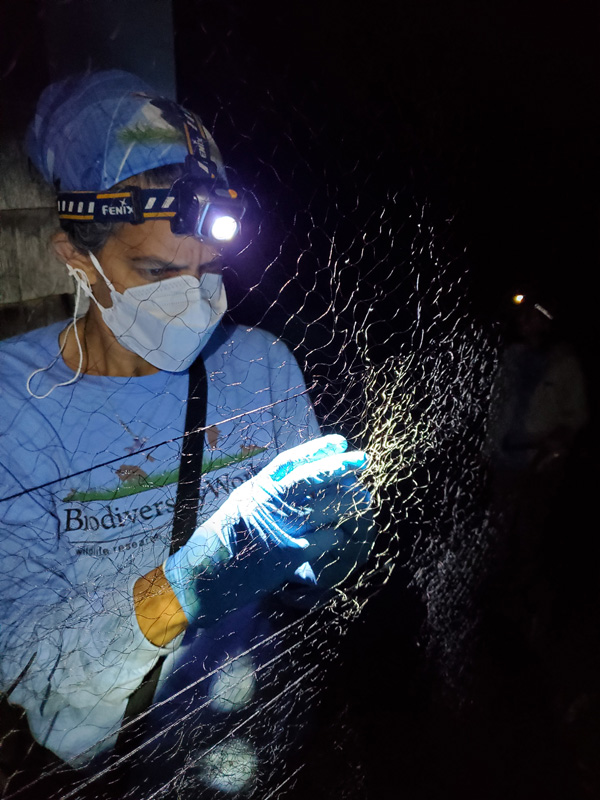
Another love of Olson’s is learning: “I love asking questions and getting to the bottom of something.” But she pointed out that working with rare species can be challenging. “Take bats. You’re out in the woods night after night. You have to follow a flying individual. But when you do catch something, it is the most amazing feeling in the world. It’s not just like, ‘We caught one!’ It’s that it adds a piece to the larger puzzle.”
To close out our interview, I asked Olson what she would like readers to think about in terms of the biodiversity on the Island: “We’re in very challenging times, and so it’s hard to think about wildlife and conservation when some of us are experiencing much harder times than others. But maybe think about the wildlife here, and our environment. Our ponds are part of our community. That’s what’s so amazing about the Vineyard — the community. We’re all connected, and that’s what makes the Vineyard special. We have to try to preserve that.”
To learn more about BiodiversityWorks and its programs and projects, visit its website, biodiversityworksmv.org.