



Michael Stimola is all about experimentation. He pushes the boundaries of his photography using various techniques to create several unique aesthetics, which you can view at the Field Gallery from August 26 through Sept. 7. Although distinct from one another, all the art pays homage to the beauty of the Vineyard, Stimola’s full-time home since 2020.
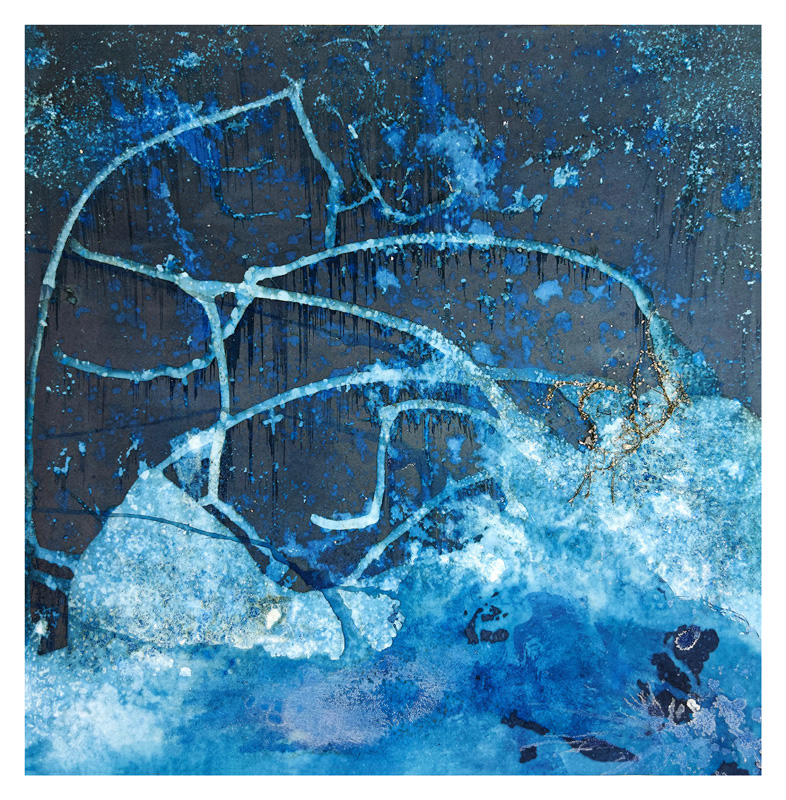
“As a photographer, my objective is to translate what begins as a personal response to a visual experience into a photograph that transcends the particular and literal, and expresses something essentially universal,” Stimola says. Sometimes these visions are entirely abstract, as are those in his “Water Marks” series. Although he employs a 19th century photographic medium in these unique works, there is no camera or lens in sight. Stimola instead uses cyanotype chemistry — a combination of iron salts, which produces a distinct Prussian blue when exposed to UV light, applying it to his thick, photographic paper. He creates each one-of-a-kind piece by letting sea or pond water and other natural elements such as sand, sediment, waterborne grasses, and shell fragments interact with the treated paper as the sun beats down upon it. The results, as in “Bend in the Road Beach, Edgartown” and “Tisbury Great Pond, Quansoo,” have a primordial sense, and seem to breathe with the organic materials that created them.
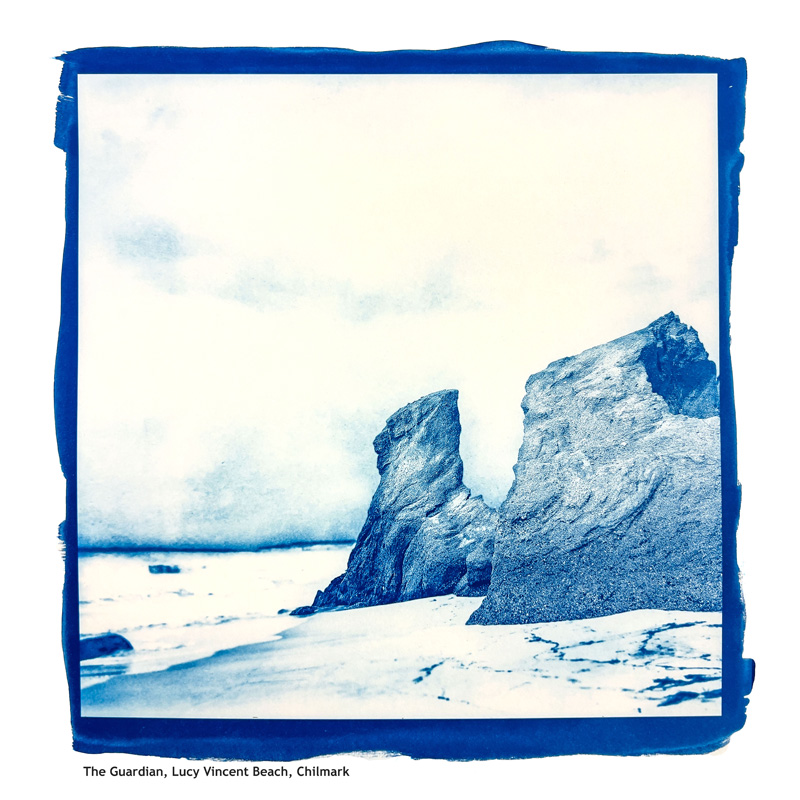
While nature and happenstance have the upper hand in determining the final results in the “Water Marks” pieces, Stimola has more control over his cyanotype contact prints. Here he creates a digital negative, sometimes using Photoshop to combine multiple images that are new or from his existing archive. Stimola places the negative on top of the chemically sensitized Hahnemuhle Platinum rag paper, and exposes it to UV light, transferring the image to the surface, which creates a handsome image in classic Prussian blue. The rag paper in photographs such as “Sweetened Water Farm, Edgartown,” “East Chop Lighthouse, Oak Bluffs,” and the now-gone standing rocks at Lucy Vincent Beach in “The Guardian, Chilmark,” give the image a mesmerizingly rich quality. They reflect his goal, which, Stimola says, “Is to infuse my prints with a sense of the everydayness of perception as filtered through my memories, associations, desires, and expectations.”
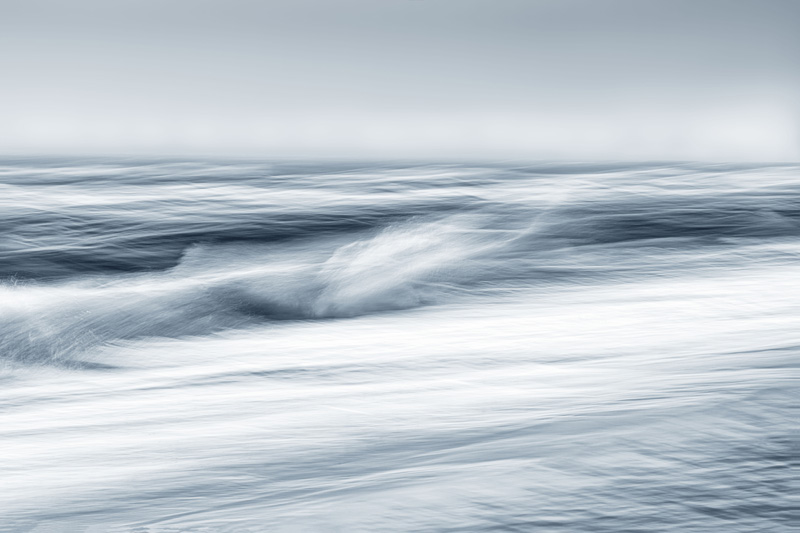
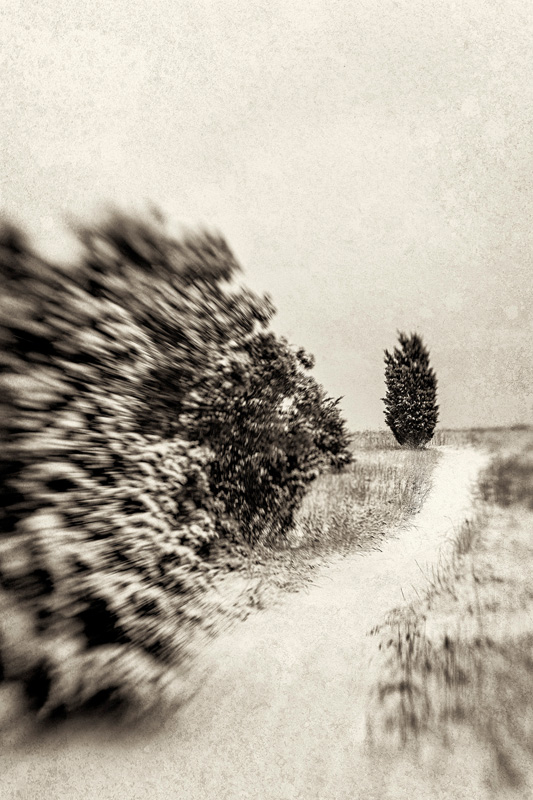
Stimola’s art originates from his response to whatever he finds interesting in otherwise everyday environments. In his artist statement, he writes, “A landscape or landscape element, a building façade or street scene, will evoke a distinct and personal impression. This evocation can be the result of a play of light and shadow, shapes within shapes, textures, motion — or most significantly, by associations and memories.” Stimola particularly summons this sense of memories in the photographs in which he moves his camera, creating a blurred motion that produces a mesmerizing, otherworldly effect. There is a dreamy quality to the archival pigment print “Snow Fall, West Tisbury,” in which a light snowfall highlights the retreating trail and evergreens at Nat’s Farm Meadow. The movement of his camera in “Spray, Chilmark,” erases the exact definition of the incoming waves so that you feel the rolling of the surf, and the aluminum surface on which he prints increases the photo’s luminosity. The same metal surface makes “April Skies, West Tisbury,” glow from within. Stimola’s intentional shifting of his camera abstracts the gorgeously colored moody sky, late-day sun, and the shoreline at Priester’s Pond. The work echoes the late 1880s Tonalists, who painted landscapes with soft, blurred lines, using colors in the midrange of tones and values in elegantly simple compositions. There are hints, too, of Pictorialist photographers of the second half of the 19th century, who eschewed documentation of reality and instead emphasized the beauty of the subject matter, the composition, and its tonality.
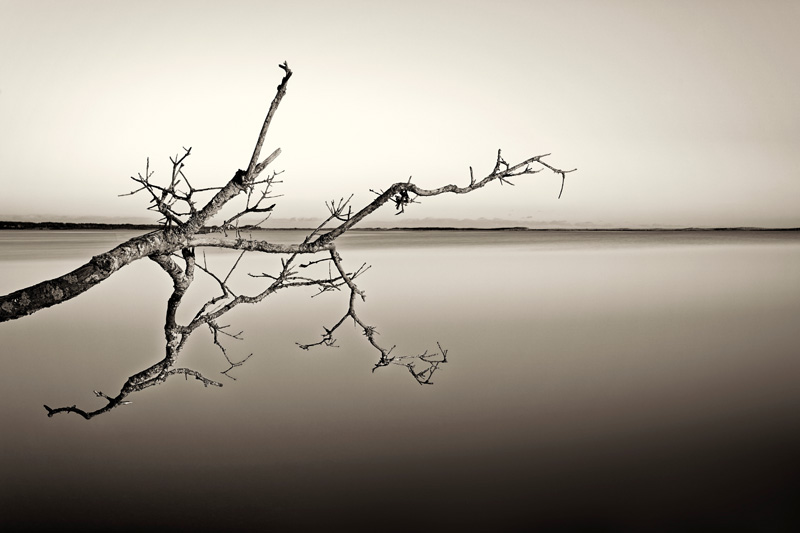
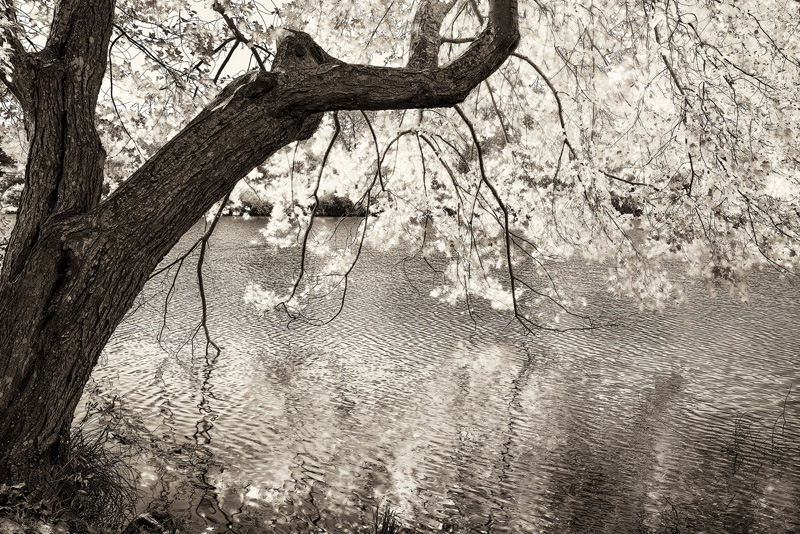
Stimola has included six black-and-white archival pigment photographs in the exhibit, printed on thin, translucent Japanese Kozo paper that imparts a lovely tone and luminosity, which you can particularly see in “Maple Glow, West Tisbury,” for instance. The soft-edged leaves on the overhanging tree light up so they resemble cherry blossoms, while the bark is in such sharp focus that you can reach out and touch it. You see the same crispness in “The Long Reach, Chilmark,” where the stark, bare branch stretches out over the dead-still water of the Tisbury Great Pond as though yearning to touch the horizon at dusk.
Ultimately, Stimola’s art, in all its permutations, makes us look more keenly at the extraordinary beauty of our Island.
For more information about the exhibition, running from August 26 through Sept. 7, see fieldgallery.com. For more information about Michael Stimola’s work, visit michaelstimolaphotography.com.